


(Dario Fo - Fiorenzo Carpi)
Quand s'eri giuvina e stavi in Luduvica
fu minga per vantamm s'eri un belee,
andavu sui bastium a faa la vita
ma la mia vita l'era un ruchetee.
I volt ch'el me basava 'stu lingera
el me strasciava fina i pagn de doss.
Mi me sentivi andaa el coo in stadera e
me scurlivi tuta fina a i oss
e me scurlivi tuta per 'stu lingera.
Avrì legiù stasera sura la gazeta
de vun che l'han cataa cun di danee,
fai su cul fà el cumercio de la strepa
quel vun a l'era propi el ruchetee.
Quand s'eri giuvina e stavi in Luduvica
stà insema a quel balurd, se l'era bell!
Anche se dent per dent el me scurliva
e me cunsciava tuta d'un murell
poeu me basava tener e mi slenguiva.
Lu el me purtava semper i calzett de seda
de quei rigaa de neglier sul calcagn,
ma dopo el me sugava la muneda
per andalla a god insema ai so tusan.
Ma un dì gou fai a ment quant s'eri ciula
e l'hou mandaa de bot a quel paes,
ma de quel dì me sunt sentida sula
compagn di gandulit in di scires
e tut perchè sunt sensa el me lingera.
Torna all’inizio
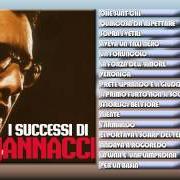
Enzo Jannacci (Milan, March 1, 1935 – Milan, October 27, 2018) was an Italian singer-songwriter, musician, and actor. Considered one of the pillars of Italian popular music, he successfully combined folk songwriting with jazz influences and theatrical elements. His career, which began in the 1960s, has been characterized by a constant musical search and a sharp irony that have made him one of the most beloved artists by the Italian public. Among his most famous songs are "When a Musician Laughs", "No tu no", "My Friend", "The Song of the Sun" and "Milan 3.6.2005". Jannacci collaborated with numerous artists, including Paolo Conte and Mina, and participated in important music festivals such as the Sanremo Music Festival. His music has often been used in films and television programs, contributing to its popularity.

 Deadly Tide
 Qubiko
 Joe Sentieri & Johnny Dorelli
 Jenesi
 Band Inschemical
 Dj Enzo
 Cappello A Cilindro
 Lost
 Loredana Daniele
 Granato
 Manuel (It)
 The New Story