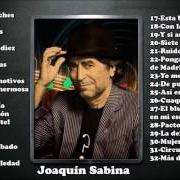









González era un ángel menos dos alas
Gonzalez era un santo por lo civil
un dandy con un ojo a la funerala
tan rojo, tan castizo y tan zascandil.
Hilaba en los garitos de mala nota.
Boleros de Machín con Juanín de Mieres
Apurando esos whiskys en los que flotan
La luna de las golfas y los crupieres.
Cuando volvía del extranjero
tan forastero,
a las dos no era de día,
a las seis ya era de noche,
pídame un coche,
fumando espero
y le aplaudían los camareros.
Otoños y otras luces, pan con verbenas
su príncipe de Gales, tan Cortefiel
Tratado de urbanismo, Juan de Mairena
chicana, magdalena, tinta y papel.
Verde por la vergüenza que no tenía,
hasta ayudó a Caronte a quemar sus naves,
decía que morirse no era tan grave
y agonizó en voz baja por cortesía.
Cuando volvía del extranjero
tan forastero,
a las dos no era de día,
a las seis ya era de noche,
pídame un coche,
fumando espero
y le aplaudían los camareros.
Joaquín Sabina (born Joaquín Ramón Martínez Sabina on July 15, 1949 in Úbeda, Spain) is one of the most influential and beloved singer-songwriters in Latin music. Known for his incisive poetry, catchy melodies, and raspy voice, Sabina has captivated a vast audience throughout Latin America and the Spanish-speaking world. His musical journey began in the 1960s with experiences in rock bands and Spanish singer-songwriters. In 1975, he released his debut album, "Inventario", which introduced him to the Spanish public. Over the following years, Sabina solidified his fame with albums such as "Malas compañías" (1982), "19 días y 500 noches" (1984) and "El viaje" (1989). His songs often address social, political, and personal themes, always with a touch of irony and sarcasm. Sabina is known for his collaborations with other artists such as Joan Manuel Serrat, Fito Páez, and Miguel Ríos. Some of his most famous songs include "Y nos dieron las diez", "La Mandrágora", "Contigo" and "Pajarita de papel". Besides music, Sabina is also a talented poet with several collections of verses published.

 Maika Makovski
 Operación Triunfo 2020
 Isabel Pantoja
 Tote King
 Canelita
 Auryn
 Rosendo
 Hordak
 Pepe
 Ainhoa
 Motel
 Duncan Dhu