








(L.E.Aute)
Degenerado y mujeriego
Con cierto aire de faquir,
Anda arrastrando su esqueleto
Por las entrañas de Madrid.
Aunque andaluz de fin de siglo
Universal, quiero decir,
No sé qué tiene de rabino
Cuando lo miro de perfil.
Amigo de causas perdidas
Desde aquel mayo de París,
No tiene más filosofía
Que el "vive a tope hasta morir".
Medio profeta, medio quinqui,
El lumpen es su pedigrí
Un tinto y una buena titi
Le bastan para resistir.
Tirando a zurdo en sus ideas
Por donde Escora Bakunín
Dice que abajo las banderas
Y arriba la lluvia de abril.
El perdedor es su universo
Aunque pretende ser feliz.
Y aún hay quien dice que está cuerdo.
Pongamos que hablo de Joaquín.
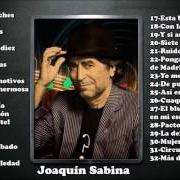
Joaquín Sabina (born Joaquín Ramón Martínez Sabina on July 15, 1949 in Úbeda, Spain) is one of the most influential and beloved singer-songwriters in Latin music. Known for his incisive poetry, catchy melodies, and raspy voice, Sabina has captivated a vast audience throughout Latin America and the Spanish-speaking world. His musical journey began in the 1960s with experiences in rock bands and Spanish singer-songwriters. In 1975, he released his debut album, "Inventario", which introduced him to the Spanish public. Over the following years, Sabina solidified his fame with albums such as "Malas compañías" (1982), "19 días y 500 noches" (1984) and "El viaje" (1989). His songs often address social, political, and personal themes, always with a touch of irony and sarcasm. Sabina is known for his collaborations with other artists such as Joan Manuel Serrat, Fito Páez, and Miguel Ríos. Some of his most famous songs include "Y nos dieron las diez", "La Mandrágora", "Contigo" and "Pajarita de papel". Besides music, Sabina is also a talented poet with several collections of verses published.

 Miki Núñez
 Despistaos
 Mirela
 Diego Martín
 Blood
 Carlos Jean
 Operación Triunfo 2018
 Paco Candela
 Barón Rojo
 Caifanes
 Frank T
 Els Amics De Les Arts