





Categoria: Big
'E femmene 'e mare so' femmene amare
So' femmene doce so' femmene overo 'E femmene
'e mare nun rideno maie
Nun rideno maie nun so' maie sincere
'E femmene 'e mare s''a portano 'a dinto
S''a portano 'a dinto 'alleria d''o campa'
'E femmene 'e mare nun sanno l' ammore
Ma songhe criature ma sanno sunna'
'E femmene 'e mare so' femmene sole
So femmene annure vestute 'e paure
E guardano 'ncielo e se fanno 'a croce
E gghiastemmano sempe nun teneno pace
'E femmene 'e mare se torceno 'e mmane
Se schiattano 'ncuorpo p'arraggia
'E femmene 'e mare se mettono scuorno d''o viento
Che passa tuccannele 'e cosce
'E femmene 'e mare s'annasconneno 'o core
Arreto a 'sta luna tutt''e vote che gghiesce
'Femmene 'e mare addorano 'e sale
'E o bene c''o male, cu a notte, fernesce
E o juorno s'affaccia 'nfucato 'a 'stu sole
'Stu sole c'appiccia 'sti facce 'e paura
Chist'uocchie sperdute 'e chi aspetta a nisciune
Chist'uocchie 'e speranza 'e chi aspetta a furtuna
'E femmene 'e mare se torceno 'e mane
Se stipano n'cuorpo ll'arraggia
'E femmene 'e mare s''a portano 'ncuollo 'sta sciorta
Nu sciallo e 'o tiempo che passa!
Lina Sastri (Pasqualina Sastri, 1932-2017) was a well-known Italian actress and singer. Born in Rome, she began her career as a singer in the 1950s, achieving moderate success with songs like "Il cielo in una stanza" and "La bambola di pezza". Subsequently, she focused mainly on acting, participating in numerous films and theatrical productions. Among her most famous roles are those in "I soliti ignoti" (1958) by Mario Monicelli and "The Good, the Bad and the Ugly" (1966) by Sergio Leone. Lina Sastri was an important figure in Italian cinema of the 1950s and 1960s, remembered for her melodious voice and stage presence.

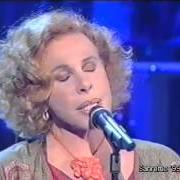 Enzo Gragnaniello & Ornella Vanoni
 Ozymandias
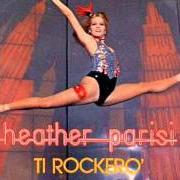 Heater Parisi
 Noyz Narcos & Chicoria
 Anna Oxa & Fausto Leali
 Robertino
 Silvana Fioresi
 Takao Wazowsky
 Lucci
 Giuseppe Murolo
 Milly E Una Notte
 Neo Ex