






Recuerdo que tenía un corazón
Alérgico a los pólenes
La muerte no existía
Éramos asquerosamente jóvenes
Veranos sin deberes
El vaho del otoño en las ventanas
Siempre hubo dos mujeres
La casta de mi pueblo y la susana
Y cuando eché a rodar
Con mi guitarra cantos de sirena
Imaginaba un mar
Donde mueren en tajo, el río, el canal
Zarpó el vapor al fin
Huyendo de la siembra y de la siega
Se parecía a mí
El polizón oculto en la bodega
Ay. ay, ay
En el salón la orquesta está tocando
Ay, ay, ay
La canción que cual neblina
Resbala hasta la centina del vapor
Hasta que se hundió
De sal el día pasó del violoncelo
La orquesta del Titanic
No dejó de tocar
El fox de los ahogados sin consuelo
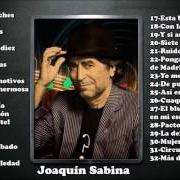
Joaquín Sabina (born Joaquín Ramón Martínez Sabina on July 15, 1949 in Úbeda, Spain) is one of the most influential and beloved singer-songwriters in Latin music. Known for his incisive poetry, catchy melodies, and raspy voice, Sabina has captivated a vast audience throughout Latin America and the Spanish-speaking world. His musical journey began in the 1960s with experiences in rock bands and Spanish singer-songwriters. In 1975, he released his debut album, "Inventario", which introduced him to the Spanish public. Over the following years, Sabina solidified his fame with albums such as "Malas compañías" (1982), "19 días y 500 noches" (1984) and "El viaje" (1989). His songs often address social, political, and personal themes, always with a touch of irony and sarcasm. Sabina is known for his collaborations with other artists such as Joan Manuel Serrat, Fito Páez, and Miguel Ríos. Some of his most famous songs include "Y nos dieron las diez", "La Mandrágora", "Contigo" and "Pajarita de papel". Besides music, Sabina is also a talented poet with several collections of verses published.

 Vaya Con Dios
 Chenoa
 Kiko & Shara
 Pau Dones Cirera
 Obrint Pas
 Zpu
 Maga
 Melendi
 Kidd Keo
 Nikone
 Mirela
 D'Nash