








Preta chique, essa pretabem linda
Essa pretamuito fina
Essa pretatoda a glria do brau
Preta preta, essa pretacorreta
Essa pretamesmo preta
Edemocrata social racial
Elamodal
Tem um gol que ela mesma comprou
Com o dinheiro que juntou
Ensinando portugus no Central
Salvador, issos Salvador
Sua suja Salvador
E ela nunca furou um sinal
Issolegal
E eu e eu e eu e eu e eu e eu e eu e eu e eu e eu
E eu e eu e eu e eu e eu e eu e eu sem ela
E eu e eu e eu e eu e eu e eu e eu e eu e eu e eu
E eu e eu e eu e eu e eu e eu e eu sem ela
Nobreza brau
Nobreza brau
Nobreza brau
Nobreza brau
Preta s, elafilha de lans
Elamuito cidad
Ela tem trabalho e tem carnaval
Elegante, elamuito elegante
Elasuper elegante
Roupa Europa e pixaim Senegal
Transcendental
Liberdade, bairro da Liberdade
Palavra da liberdade
ElaNeide Candolina total
E a cidade, a baa da cidade
A porcaria da cidade
Tem que reverter o quadro atual
Pra lhe ser igual
E eu e eu e eu e eu e eu e eu e eu e eu e eu
E eu e eu e eu e eu e eu e eu e eu sem ela
E eu e eu e eu e eu e eu e eu e eu e eu e eu e eu
E eu e eu e eu e eu e eu e eu e eu sem ela
Nobreza brau
Nobreza brau
Nobreza brau
Nobreza brau
Caetano Emanuel Viana Telles Veloso (Salvador, April 7, 1942) is one of the most influential singer-songwriters in Brazil. Born into a bourgeois family, he developed a passion for music at a young age, embracing bossa nova and rock. In the 1960s, in Rio de Janeiro, he became part of the Tropicália movement, a cultural explosion that blended traditional Brazilian elements with international influences such as pop, psychedelic, and jazz. Caetano Veloso is known for his innovative melodies, poetic lyrics, and distinctive voice. A key figure in the Tropicália movement, he collaborated with artists like Gilberto Gil, Tom Zé, and Gal Costa. In 1968, following military censorship in Brazil, he was exiled to London. After returning home, he continued to produce highly successful music, exploring new genres such as world music and electronic. Among his most famous songs are "Alegria, Alegria", "Sozinho", "Sampa", and "O Leãozinho". Caetano Veloso is considered a Brazilian cultural icon, whose impact on the music and society of his country remains profound.

 Fábio Jr.
 Emicida
 Impurity
 Shirley Carvalhaes
 Nando Reis
 Ivete Sangalo
 Zuco 103
 Aline Barros
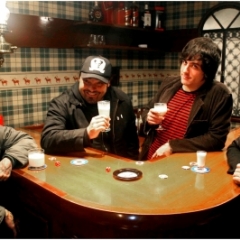 Hateen
 Henrique & Juliano
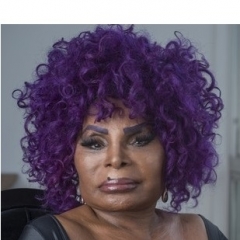 Elza Soares
 Thiaguinho