






Quan no queda res a dir
quan ja és fosa la neu
quan girem els ulls a Déu
pregant pel nostre patir.
Quan els arbres despullants
perdudes totes les fulles
quan ens punxen com agulles
els rostolls dels camps segats.
Quan la brasa es torna cendra
quan el gos dorm ajupit
quan la vida ja no és tendra
i ens fa mal dintre del pit.
Quan perquè canti millor
treuen els ulls al pinsà
quan se'n riuen de l'amor
com tu, com tu, com tu,
que no saps estimar.
Jo amor encara sent
dintre meu anguniós
amb la força d'un gran vent
el sentiment tan hermós.
Que en un dia la llunyà
va néixer com un no-res
amb la carícia d'un bes
en una estreta de mà.
T'estim i t'estimaré
malgrat aquesta tardor
que per tu ara esdevé
i posseeix nostre amor.
T'estim i t'estimaré
t'estim,
i t'estimaré,
t'estim, t'estim...
i t'estimaré.
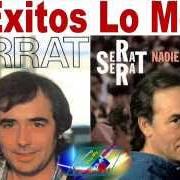
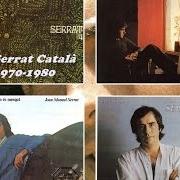
Joan Manuel Serrat i Teresa (Barcelona, 1943) is one of the most beloved and influential Spanish singer-songwriters of all time. His career, which began in the 1960s, is characterized by a deep poetic sensibility, the skillful use of the Catalan language, and a repertoire that ranges from folk to songwriting, passing through jazz and popular music. Serrat is known for his intense and emotional interpretations, often accompanied by an acoustic guitar. Among his most famous songs are "Testament", "La Mala Vida", "Mediterráneo" and "El Cantante", the latter becoming an anthem for freedom of expression. Serrat has collaborated with numerous international artists, including Pablo Milanés and Víctor Jara. Throughout his long career he has won numerous awards, including the Premio Nacional de Música (1986) and the Grammy Award for Lifetime Achievement (2007). His music has been a source of inspiration for generations of musicians and continues to be appreciated worldwide.

 Pablo Alborán
 Bajo Mínimos
 Obrint Pas
 Pepe
 Merche
 Jorge González
 Vega
 Despistaos
 Miguel Bosé
 The Zombies
 Malú
 Danny Romero